

Best overall for a standalone option: a clearly labelled copper bisglycinate supplement. Best simple alternative: copper gluconate. Best for an existing wider routine: a multinutrient that explicitly lists copper. The best copper supplement in the UK is the one that fits a genuine need without duplicating copper you already take.
- Best copper supplement UK verdict: choose clearly labelled copper bisglycinate when you need a standalone option.
- Copper gluconate is another standalone form; a copper-containing multinutrient suits a wider nutrient routine.
- Check the elemental copper amount across every supplement before adding another product.
- The SRX Formula is a wider wellness routine, not a verified standalone copper supplement.
Why this matters
Copper supports normal connective tissues, iron transport, and hair and skin pigmentation. That makes it relevant to questions about changes in appearance, but copper is not a treatment for hair loss, dull skin, or visible ageing. If those changes prompted your search, start by separating copper’s established roles from claims that a supplement will change how you look. This guide to copper supplements for skin and hair health explores that distinction.
The NHS states that adults need 1.2 mg of copper a day and can usually get it from a varied diet. Its guidance also says that taking 10 mg or less a day from copper supplements is unlikely to cause harm. That is a safety statement, not a dose to aim for: more copper does not mean better skin, hair, or energy.
In 2026, the useful buying question is not which form has the strongest beauty claim. It is whether you need extra copper, how much elemental copper the label supplies, and whether another supplement already contains it. A named compound on the front of a pack cannot answer those questions by itself.
What makes the best copper supplement?
These criteria determine the ranking. They do not establish that one copper compound produces better results than another.
- A clear reason to take it. A clinician-identified need is stronger grounds than a change in your skin or hair alone. Ask what else needs checking before treating a symptom as copper deficiency.
- Elemental copper on the label. Look for the amount of copper supplied per daily serving, not just the weight of the copper compound. That is the figure you can compare across products.
- A manageable total. Add copper from your multivitamin and other supplements before choosing a standalone capsule. The NHS adult intake figure is a daily requirement, not a target for each product.
- A suitable ingredient list. Check the full formula against your diet, other supplements, medicines, and any advice from your clinician. A multinutrient changes more than your copper intake.
- Claims that match copper’s role. Normal pigmentation and connective-tissue function are not promises to reverse greying, firm skin, or restore lost hair. Skip a product whose case rests on that leap.
A form name earns a place in this guide only if you can judge the actual labelled product against those criteria. No specific manufacturer’s formula, copper dose, or quality testing is provided here, so the ranking is by buying approach, not by unverified product performance.
Best copper supplement UK 2026: at a glance
| Option | Best for | Standout feature | Key limitation |
|---|---|---|---|
| Copper bisglycinate | A standalone option when extra copper has been advised | Makes copper the focus of the purchase | The form alone does not prove better results |
| Copper gluconate | A simple standalone alternative | Lets you assess copper without choosing a wider formula | Still needs a clear elemental-copper amount |
| Copper-containing multinutrient | A wider nutrient routine that already includes copper | Keeps the copper check within one existing label | Other included nutrients require checking too |
Choose by need and total intake, not by a claim that one form transforms skin or hair. The comparison does not establish that bisglycinate absorbs better than gluconate, and it does not turn a multinutrient into a treatment for deficiency.
1. Copper bisglycinate: best copper supplement for a standalone choice
Copper bisglycinate is a named form of copper you can look for in a single-mineral supplement. It ranks first because a standalone product gives you a direct decision: do you need copper, and does its label clearly state how much elemental copper it supplies? The name alone is not evidence of better absorption or better outcomes than gluconate.
Copper bisglycinate pros:
- Keeps the purchase focused on copper rather than a wider mix of nutrients.
- Allows a straightforward comparison when the elemental amount is stated clearly.
- Gives you a distinct option if a clinician has advised separate copper supplementation.
Copper bisglycinate cons:
- Adds a separate product to your routine, increasing the chance of overlooking copper elsewhere.
- Does not solve an unexplained skin, hair, or fatigue symptom simply because copper has a recognised biological role.
- Provides no automatic advantage if the label is unclear about elemental copper.
Best for: Someone with a reason to add copper separately who can check the complete supplement list first. Verdict: Buy only when the need and total dose are clear; otherwise, hold. In 2026, a clean-looking ingredient panel is no substitute for those checks.
2. Copper gluconate: best simple copper supplement alternative
Copper gluconate is another named form used for standalone copper supplementation. Treat it as a practical alternative to bisglycinate, not a proven lesser form. Your decision still rests on the elemental copper amount, other ingredients, and whether you need a separate supplement at all.
Copper gluconate pros:
- Keeps copper separate from a broader multinutrient formula.
- Can be assessed using the same elemental-copper label check as bisglycinate.
- Offers another form to consider without changing the purpose of the purchase.
Copper gluconate cons:
- The compound name does not tell you the daily copper intake.
- A second copper-containing product can duplicate what is already in your routine.
- No conclusion about its relative absorption follows from the form name alone.
Best for: Someone seeking a standalone alternative after confirming that additional copper is appropriate. Verdict: Buy if the label and total intake check out; otherwise, hold. Do not choose between gluconate and bisglycinate on an unsupported promise of faster visible results.
3. Copper-containing multinutrient: best for a wider nutrient routine
A multinutrient belongs in this ranking only when its actual label lists copper. It suits you if you already want a wider nutrient routine and do not need copper as a separate product. Because formulas differ, check the full ingredient list rather than assuming that every multivitamin supplies copper.
Copper-containing multinutrient pros:
- Lets you assess copper within a routine you already use.
- Can avoid adding a standalone copper product when the existing formula meets your needs.
- Puts the amounts of several included nutrients on one label for review.
Copper-containing multinutrient cons:
- Adds nutrients you may not be looking for; each one needs its own safety check.
- Does not offer the same single-mineral focus as a standalone copper product.
- Creates a duplication risk if you also take separate mineral supplements.
Best for: Someone who wants a broader supplement and has confirmed that its listed copper amount is appropriate. Verdict: Buy for the wider routine, not as an assumed fix for copper deficiency; otherwise, hold. In 2026, read the current label before relying on the product name or an older description.
Check your copper intake before choosing
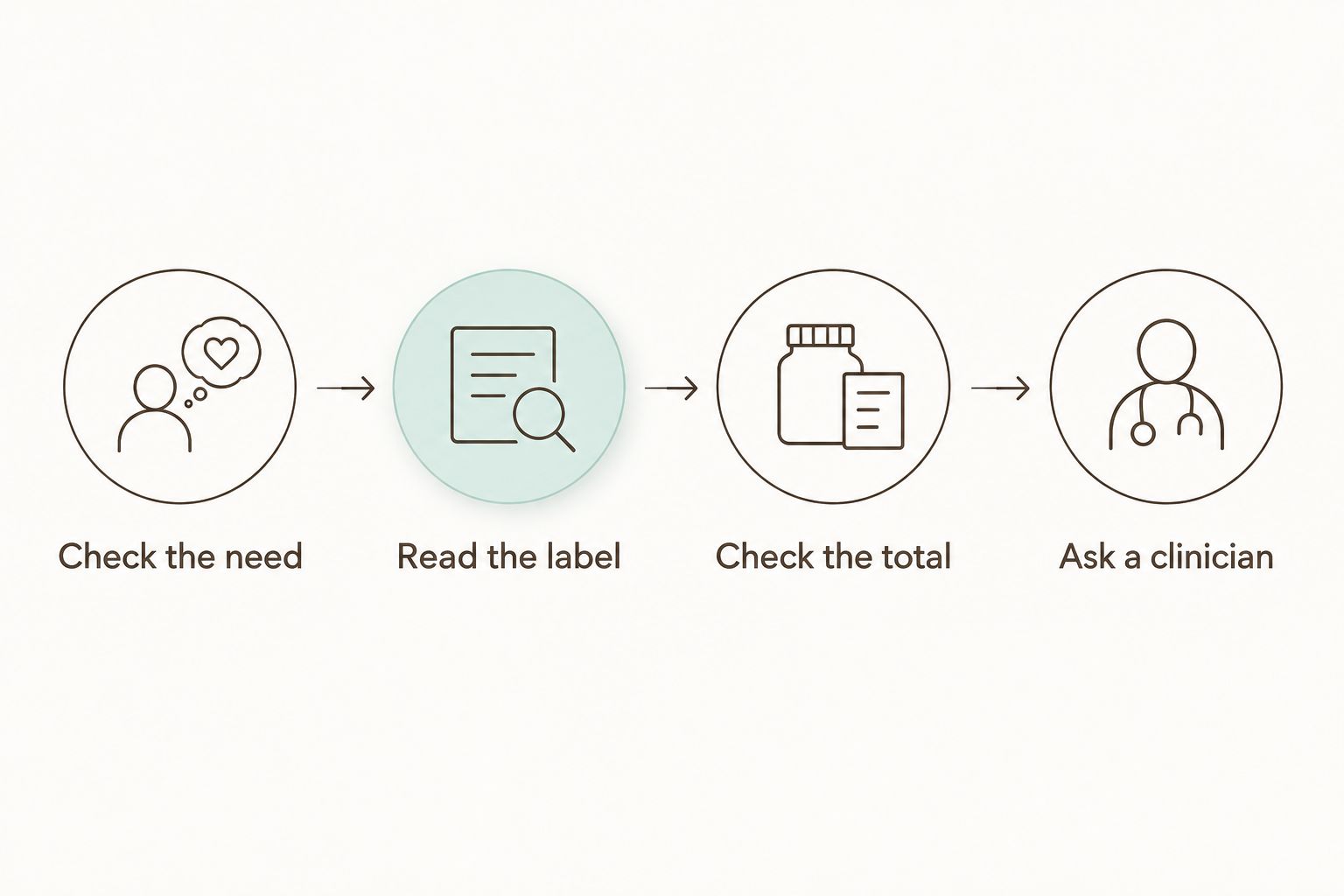
The safest comparison is between your reason for taking copper and your complete routine. Start with the supplement labels you already have, then consider a new product. If a symptom is driving the search, a GP or pharmacist can help you decide whether it calls for investigation instead of another capsule.
- Check the need. Write down the concern that led you here. Hair shedding, skin changes, and tiredness do not identify a copper deficiency on their own.
- Read the label. Find the daily serving and the stated amount of elemental copper. If that figure is not clear, you cannot make a sound comparison.
- Check the total. Review every multivitamin, mineral blend, and standalone product you take. Count overlapping supplemental copper rather than evaluating each pack in isolation.
- Ask a clinician. Get individual advice if deficiency is suspected, you have a relevant medical condition, or your supplement routine is difficult to assess.
This order also protects you from a common mistake: using the NHS figure of 1.2 mg a day for adults as though it were an instruction to add that amount on top of food. It describes total daily need. The separate NHS statement about 10 mg or less a day from supplements addresses likely harm; it is not a recommendation to take 10 mg.
If you have Wilson’s disease, do not treat a general copper buying guide as personal supplementation advice. Copper accumulation is central to that condition, so follow your specialist’s instructions. For other medical conditions or medicines, ask a qualified clinician to assess your circumstances rather than assuming a mineral supplement is harmless.
Where The SRX Formula fits
The SRX Formula is best for adults seeking a structured energy, hydration, and sleep-and-skin support routine, not a verified standalone copper supplement. Its All-in-One Formula Box is described as a 24-hour wellness system with three precision blends. The information supplied for this guide does not establish whether those blends contain copper or state a copper amount, so do not count the box as a copper source without checking its current label.
That distinction matters if your concern is broader than one mineral. Changes in sleep, energy, hydration, and how your skin looks can overlap, especially when you are trying to understand a change in your 40s. A wider routine addresses a different buying question from targeted copper supplementation; it does not replace an assessment for suspected deficiency.
For a copper-specific decision in 2026, check the box’s current ingredients alongside everything else you take. If copper is absent, the system is not your copper supplement. If copper is listed, use its stated elemental amount in your total-intake check before considering another product. The SRX Formula should not be ranked above a clearly labelled standalone copper supplement for a copper-specific need.
Review your wider wellness routine
See the energy, hydration, and sleep-and-skin system; check the current ingredients before assessing copper.
How we ranked these copper supplement options
The ranking follows the decision a UK reader needs to make in 2026: establish the need, identify the elemental copper amount, and prevent overlap with an existing routine. A clearly labelled standalone form comes first when copper itself is the reason for buying. A multinutrient comes last because it is a broader decision, with more ingredients to review.
This is not a head-to-head product test. No manufacturer-specific doses, independent test results, or outcome data were provided for comparison. Bisglycinate leads as a buying approach, not because its form has been shown here to outperform gluconate. If you cannot establish a reason to supplement, none of the ranked options earns a purchase recommendation.
Which copper supplement should you choose?
Choose a clearly labelled copper bisglycinate product if a standalone copper supplement is appropriate and its elemental amount fits your total intake. Choose copper gluconate when it meets those same checks and you prefer that standalone form. Choose a copper-containing multinutrient only when you want the wider formula and have reviewed every included nutrient.
If your search began with unexplained hair, skin, or energy changes, hold off on buying copper solely for that symptom. Copper’s role in normal physiology does not identify the cause of a visible change. Get the cause assessed, then choose a supplement that answers the identified need rather than the most persuasive claim on a pack.
FAQ
What is the best copper supplement in the UK in 2026?
A clearly labelled standalone copper supplement is the best choice when extra copper has been advised and you have checked your total intake. Copper bisglycinate and copper gluconate are options; the form name alone does not establish which works better.
Is copper bisglycinate better than copper gluconate?
Neither form is shown here to deliver better results than the other. Compare the stated elemental copper amount and the full ingredient list, then check whether a separate supplement is needed.
How much copper do UK adults need each day?
The NHS states that adults need 1.2 mg of copper a day, usually obtainable from a varied diet. That is a total daily requirement, not an instruction to add 1.2 mg through a supplement.
Can I take copper with a multivitamin?
Check whether the multivitamin already lists copper before adding a separate copper supplement. Add up the stated elemental copper from all your supplements and ask a clinician if you are unsure what is appropriate.
Will a copper supplement stop grey hair or hair shedding?
A copper supplement is not a proven fix for grey hair or unexplained shedding. Copper contributes to normal hair pigmentation, but that role does not establish the cause of your hair change or the benefit of taking extra copper.
Does The SRX Formula contain copper?
The information supplied for this guide does not confirm whether The SRX Formula contains copper. Check the current product label for the ingredient and its elemental amount before counting it towards your copper intake.
Should I take copper for dull skin or tiredness?
Do not use dull skin or tiredness alone as a reason to start copper. Those symptoms do not identify a copper deficiency; ask a GP or pharmacist what needs checking if they persist or concern you.
One last thing
The most useful number on a copper supplement is elemental copper per daily serving, not the amount of the compound named on the front. Check that number across your entire routine before comparing forms. If you cannot find it, hold off: a supplement you cannot assess is not the best choice for you.