

Best overall for a dedicated choline supplement in the UK: a clearly labelled choline bitartrate product. Best food-first option: eggs. Best for a phospholipid form: phosphatidylcholine. In 2026, the deciding detail is the amount of choline, not the weight of the ingredient carrying it. The SRX Formula all-in-one formula box is a broader daily wellness system; its choline content is not established by the information available for this guide, so it is not ranked as a choline supplement.
- Best choline supplement UK verdict for 2026: choose clearly labelled choline bitartrate when you need a dedicated supplement.
- Eggs are the best food-first option; phosphatidylcholine suits shoppers who specifically want a phospholipid form.
- Compare milligrams of choline per serving, not milligrams of choline bitartrate or another source ingredient.
- The SRX Formula is a broader wellness system, not a verified source of choline in this comparison.
Why this matters
Choline helps your body maintain normal liver function and normal lipid metabolism. Your body also uses it to make acetylcholine, a molecule involved in nerve signalling. Those functions make choline a nutrient to account for, but they do not mean a supplement will fix tiredness, brain fog or visible skin changes.
The European Food Safety Authority (EFSA) sets an adequate intake of 400 mg of choline per day for adults, 480 mg per day during pregnancy and 520 mg per day during lactation. These are daily intake reference values from food and supplements combined, not instructions to take those amounts in a capsule. In 2026, start with your diet and the stated choline content of anything you already take before adding another product.
What makes the best choline supplement?
- Choline per serving: Look for a figure stated as milligrams of choline. A label that lists only the weight of choline bitartrate, phosphatidylcholine or citicoline does not answer the same question.
- A form that matches your aim: Choline bitartrate is a direct way to supplement choline. Phosphatidylcholine is a phospholipid source. Citicoline is usually chosen for an interest in cognition, not because its name establishes a clinical benefit.
- Your existing intake: Eggs, meat, fish and some plant foods provide choline. A supplement is easier to assess once you know which sources already feature in your meals.
- A readable ingredient list: Check the serving size, other active ingredients and any allergens. Do not assume products with similar names contain the same amount of choline.
- Suitability for your circumstances: Pregnancy, breastfeeding, prescribed medicines and medical conditions change what you should discuss with a pharmacist, midwife or GP before use.
The best label names both the choline source and the amount of choline it supplies. If one of those details is missing, ask the seller for clarification rather than treating the ingredient weight as your daily choline intake.
Choline options at a glance
| Option | Best for | Standout feature | Key limitation |
|---|---|---|---|
| Choline bitartrate | A dedicated, measurable choline supplement | Direct comparison when elemental choline is stated | Ingredient weight and choline weight are different |
| Eggs | Food-first choline intake | Choline within an ordinary food | Not suitable for everyone and difficult to measure precisely |
| Phosphatidylcholine | A phospholipid source | Supplies choline as part of a phospholipid | Phosphatidylcholine weight is not choline weight |
| Citicoline | A specific interest in the citicoline form | Clearly identifiable compound to compare across labels | Not a proven shortcut to better focus in healthy adults |
These are forms and food sources, not ranked UK product brands. No brand-by-brand formulations, label amounts or independent testing results are available here. A named product winner would imply a comparison the evidence does not support.
1. Choline bitartrate: best dedicated choline supplement
Choline bitartrate puts choline in a single-ingredient form that is straightforward to compare when the label states the actual choline amount. It ranks first for someone who has identified a gap in their intake and wants to assess what a supplement contributes. The word bitartrate describes the compound; it is not an extra choline benefit.
Choline bitartrate pros:
- A focused choice when you want choline rather than a wider supplement blend.
- Easier to compare with daily intake references if the label states milligrams of choline.
- Lets you evaluate the choline contribution separately from other nutrients.
Choline bitartrate cons:
- Some labels emphasise compound weight instead of the amount of choline supplied.
- It does not replace a varied diet or establish why a symptom has appeared.
- Digestive tolerance and other ingredients still need checking on the specific product.
Best for: Adults seeking a dedicated choline source with a clearly stated choline amount. Verdict: Buy only when the choline amount per serving is clear and the supplement is appropriate for you. In 2026, a prominent front-label figure is not enough if the ingredient panel does not explain what it measures.
2. Eggs: best food-first source of choline
Eggs provide choline as part of a normal meal, rather than as an isolated ingredient. They are the most useful alternative to consider before buying a supplement if you eat eggs and want to review your regular dietary intake. Choline also comes from other foods, so avoiding eggs does not automatically mean you need a capsule.
Eggs pros:
- Add choline through food without introducing a new supplement.
- Fit naturally into a review of what you already eat.
- Avoid confusion between a capsule’s ingredient weight and its choline content.
Eggs cons:
- Unsuitable if you avoid eggs or have an egg allergy.
- Everyday portions do not provide a precise supplement-style label figure.
- A single food choice cannot tell you whether your total daily intake is adequate.
Best for: People who eat eggs and want to consider food before a dedicated product. Verdict: Buy as food, not as a guaranteed substitute for assessing your whole diet. In 2026, the practical question is whether choline-rich foods appear regularly across your meals, not whether one breakfast contains the nutrient.
3. Phosphatidylcholine: best phospholipid form
Phosphatidylcholine is a phospholipid that contains choline. Choose it if you specifically want that form and the product explains how much choline its serving supplies. Do not read a phosphatidylcholine figure as an equivalent amount of choline; the two measurements describe different things.
Phosphatidylcholine pros:
- A distinct form for shoppers intentionally seeking a phospholipid source.
- Allows form-specific comparisons when the label provides enough detail.
- Can contribute to overall choline intake.
Phosphatidylcholine cons:
- The phosphatidylcholine amount alone does not establish the choline amount.
- Source ingredients and allergens need checking product by product.
- It is harder to compare against choline bitartrate when labels use different measurements.
Best for: Adults who have a specific reason to prefer a phospholipid form and can verify its choline contribution. Verdict: Hold until the label states how much choline you actually receive. A form preference is not a reason to ignore the serving information.
4. Citicoline: best for a specific interest in citicoline
Citicoline, also called CDP-choline, is a choline-containing compound. It is often discussed in relation to cognition, but a shopper should separate interest in the compound from a promise of better concentration. If your goal is simply to account for dietary choline, first check how the product declares its choline contribution.
Citicoline pros:
- A clearly named form if you are deliberately researching citicoline.
- Distinguishable from choline bitartrate and phosphatidylcholine on an ingredient list.
- Gives you a specific compound to discuss with a healthcare professional.
Citicoline cons:
- Claims about focus require more scrutiny than the ingredient name alone provides.
- A citicoline serving amount should not be treated as the same amount of choline.
- It is an unnecessarily complicated default if you only need to check your choline intake.
Best for: People investigating citicoline itself, rather than assuming any choline product improves focus. Verdict: Hold unless you can explain why you want this form and interpret its label. For a basic choline comparison in 2026, clearly declared choline content matters more than a cognition-led product description.
How to choose without guessing
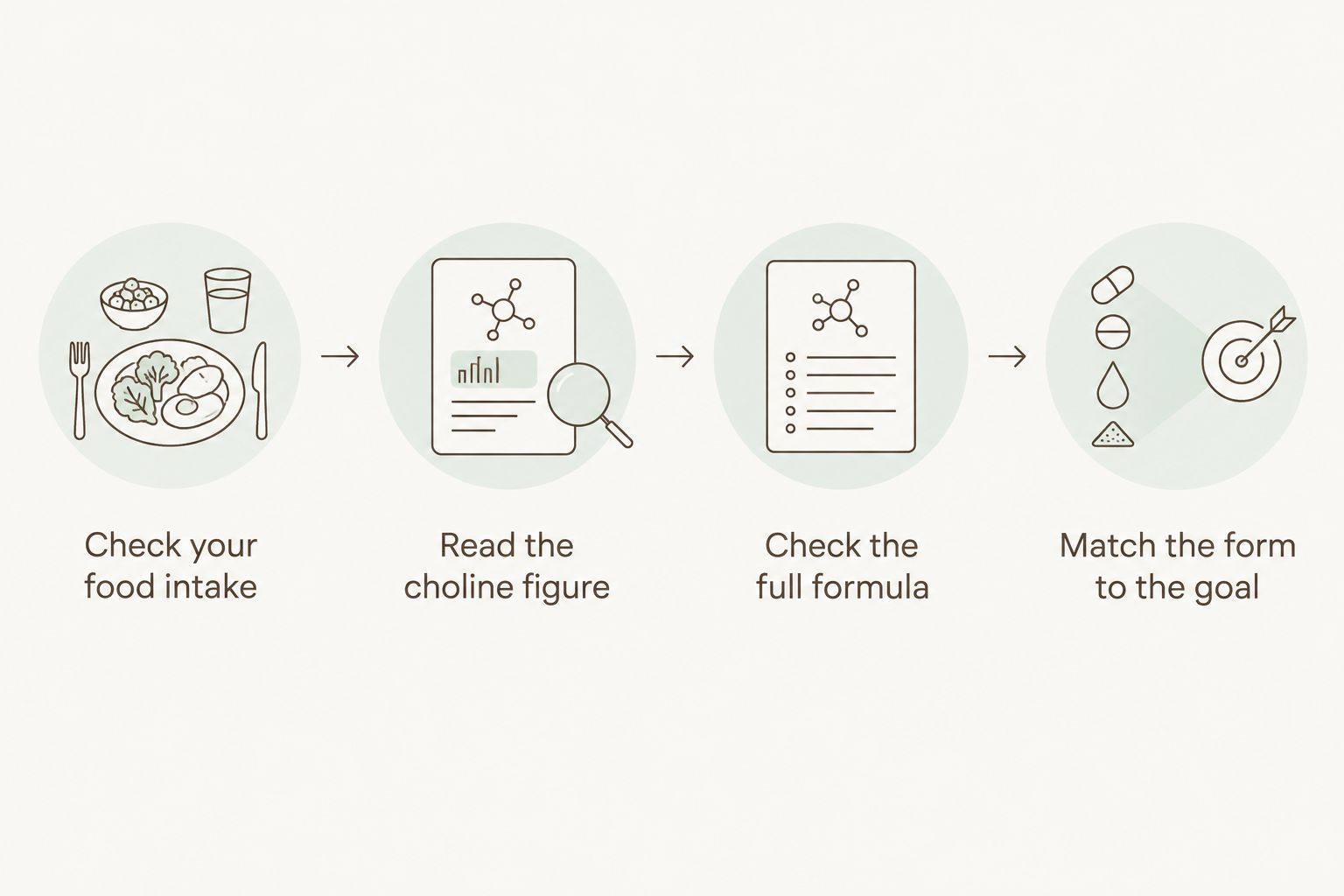
Use the same order of checks for every product. It stops an appealing form name or a large ingredient figure from taking the place of the information you need.
- Check your food intake. List your usual sources of choline before assuming a supplement is necessary.
- Read the choline figure. Find milligrams of choline per serving; keep that separate from milligrams of the source compound.
- Check the full formula. Review serving instructions, other ingredients and allergens, especially if you already take supplements.
- Match the form to the goal. Choose a straightforward source for a straightforward intake question. Seek professional advice for a medical or pregnancy-related question.
If a label gives only an ingredient amount, you cannot reliably compare that number with EFSA’s daily adequate intake. Ask for the choline figure. If the seller cannot provide it, move to a product with a clearer label.
Where The SRX Formula fits
The SRX Formula is a daily wellness system, not the default answer to a dedicated choline search. Its stated structure uses three blends addressing energy, hydration, and sleep and skin support. The information provided for this guide does not establish whether the system contains choline or how much choline any serving supplies.
That distinction matters if your question began with brain fog, fatigue or a change in how your skin looks. Those experiences do not identify a choline shortfall. Compare the pattern of symptoms, your diet, your sleep and any medicines with a qualified professional rather than buying a nutrient on the strength of a symptom alone. The SRX Formula belongs in a conversation about a structured daily routine; a clearly labelled choline product belongs in a conversation about choline intake.
For women noticing changes in their 40s, the broader context is useful. Several changes can appear together without sharing one nutrient explanation. The guide to why you don’t suddenly age explores that wider question; it is not a test for choline status.
How we ranked these options
The ranking prioritises a clear choline amount, a distinct use case and an honest limitation. Choline bitartrate leads as a dedicated supplement form because it can answer a direct intake question when its label states milligrams of choline. Eggs take the food-first slot; phosphatidylcholine and citicoline are form-specific choices, not interchangeable claims about better results.
This is not a ranking of manufacturing quality or clinical outcomes for named UK products. Without product labels and independent comparisons, assigning those winners would be false precision. The 2026 choice remains conditional on the product you actually hold: inspect its serving information before deciding.
Which choline option should you choose?
Choose clearly labelled choline bitartrate if you have a reason to use a dedicated supplement and need to compare its contribution with your diet. Choose eggs if you eat them and want a food-first starting point. Choose phosphatidylcholine only when you want that phospholipid form and can verify its choline content. Reserve citicoline for a deliberate, informed choice about that compound; do not treat it as a general answer to brain fog.
If you are pregnant, breastfeeding or planning pregnancy, ask your midwife, GP or pharmacist to assess your full diet and supplement routine. Choline does not replace folic acid or other pregnancy guidance. If you take medicines or have a liver condition, get individual advice rather than using a ranked list to set your intake.
FAQ
What is the best choline supplement in the UK in 2026?
A choline bitartrate product that clearly states milligrams of choline per serving is the best starting point for a dedicated choline supplement. Check your diet and the complete ingredient label before choosing a product.
Is choline bitartrate better than phosphatidylcholine?
Choline bitartrate is easier to assess for a straightforward choline-intake goal when its label states the choline amount. Phosphatidylcholine suits someone specifically seeking a phospholipid form, but its compound weight must not be mistaken for its choline content.
Is citicoline the best choline form for focus?
Citicoline is not a proven default fix for poor focus in healthy adults. Discuss persistent concentration changes with a healthcare professional rather than assuming they reflect low choline intake.
How much choline do adults need each day?
EFSA sets an adequate intake of 400 mg of choline per day for adults. That figure covers total intake from food and supplements; it is not a suggested capsule dose.
How much choline is needed during pregnancy?
EFSA sets an adequate intake of 480 mg per day during pregnancy. Ask your midwife or GP how your diet and any supplements fit your individual circumstances.
Can eggs replace a choline supplement?
Eggs can contribute choline to your diet, but whether you need a supplement depends on your overall intake and circumstances. Review your usual meals rather than treating one food as a complete assessment.
Does The SRX Formula contain choline?
The choline content of The SRX Formula is not established by the information available for this guide. Check the current ingredient and nutrient information rather than treating its all-in-one formula box as a dedicated choline supplement.
One last thing
A supplement label can put the largest number next to the source compound, while the amount you need for a dietary comparison is the choline supplied. In 2026, make that distinction before deciding between choline bitartrate, phosphatidylcholine and citicoline. If the figure is absent, that is a reason to pause, not to guess.